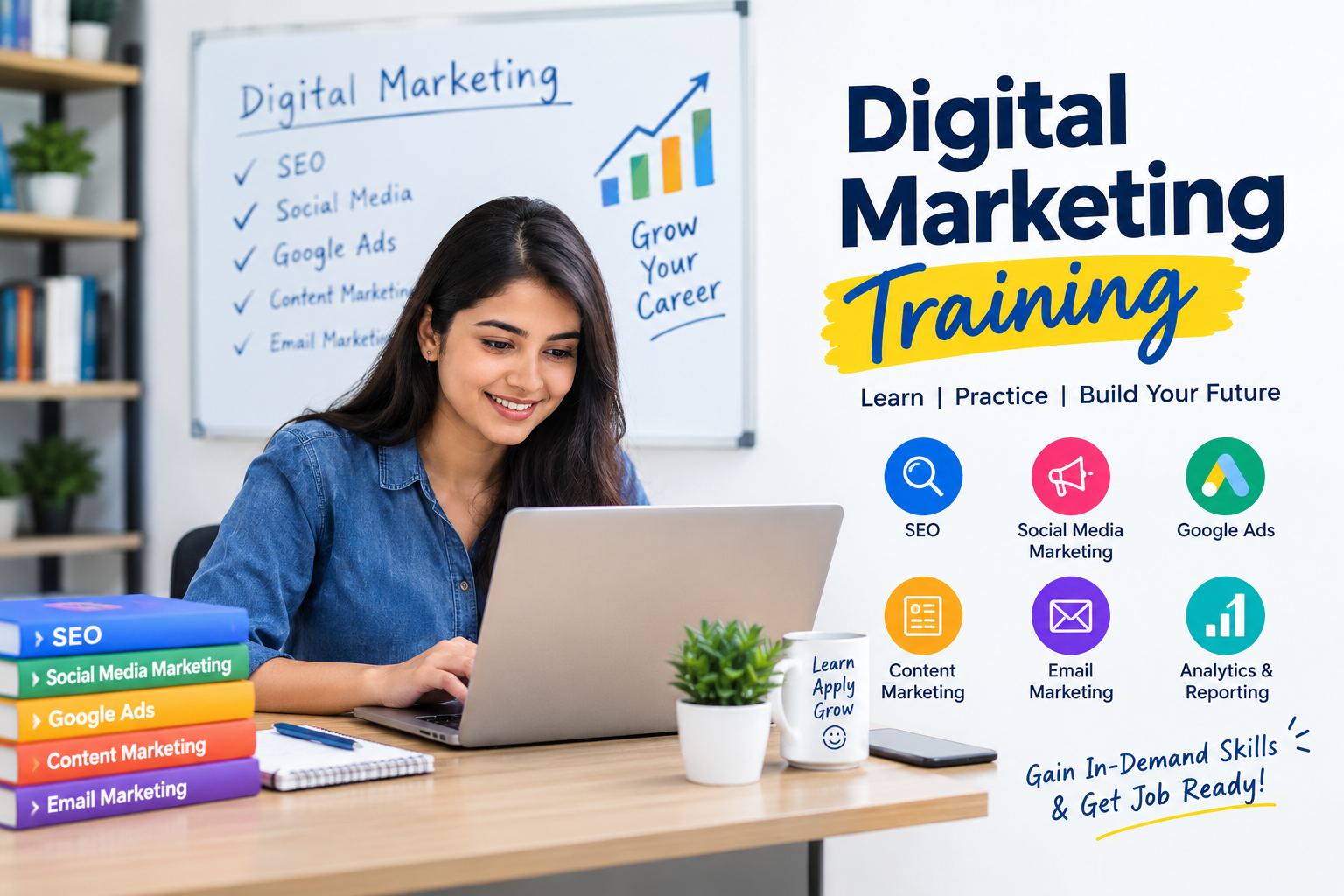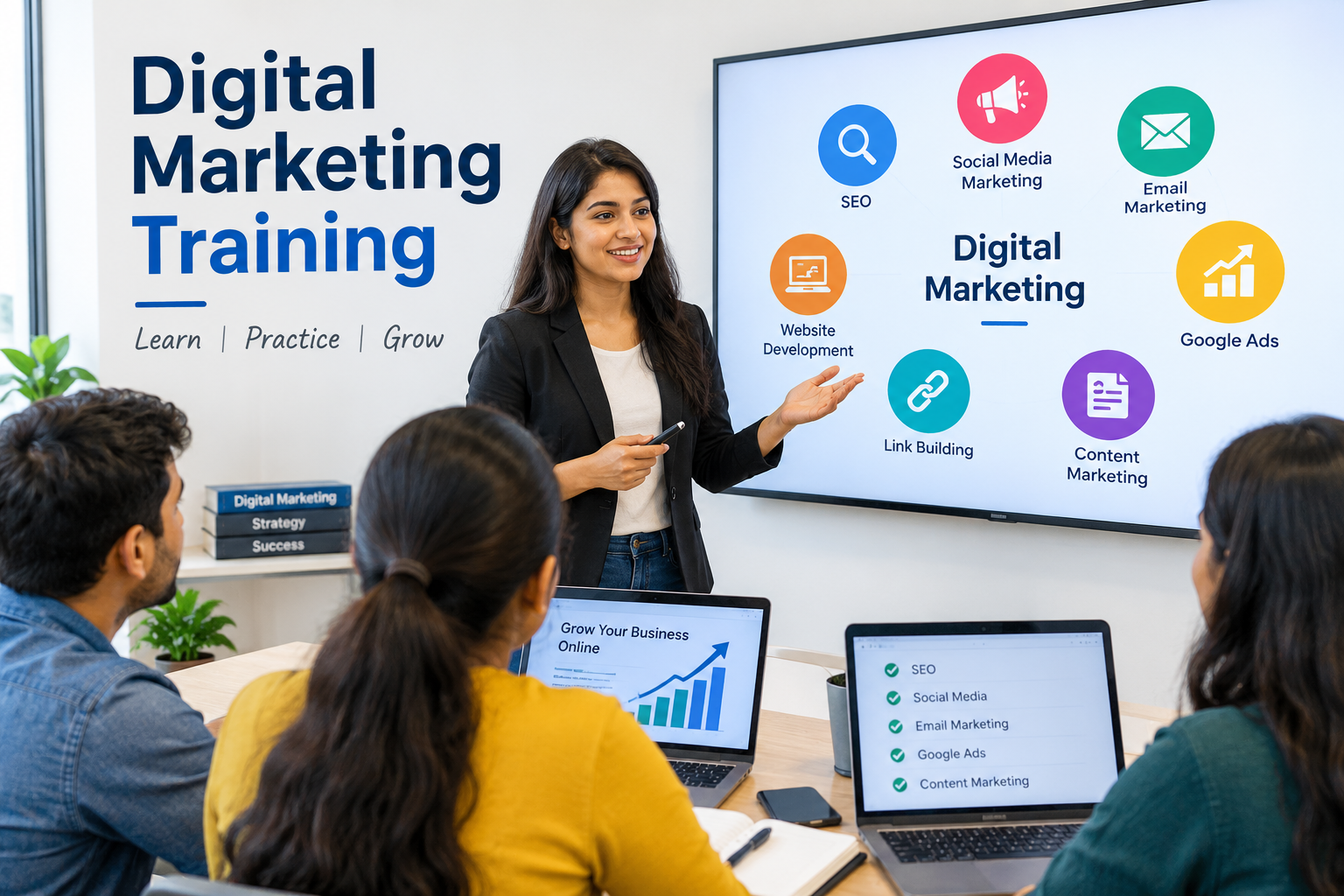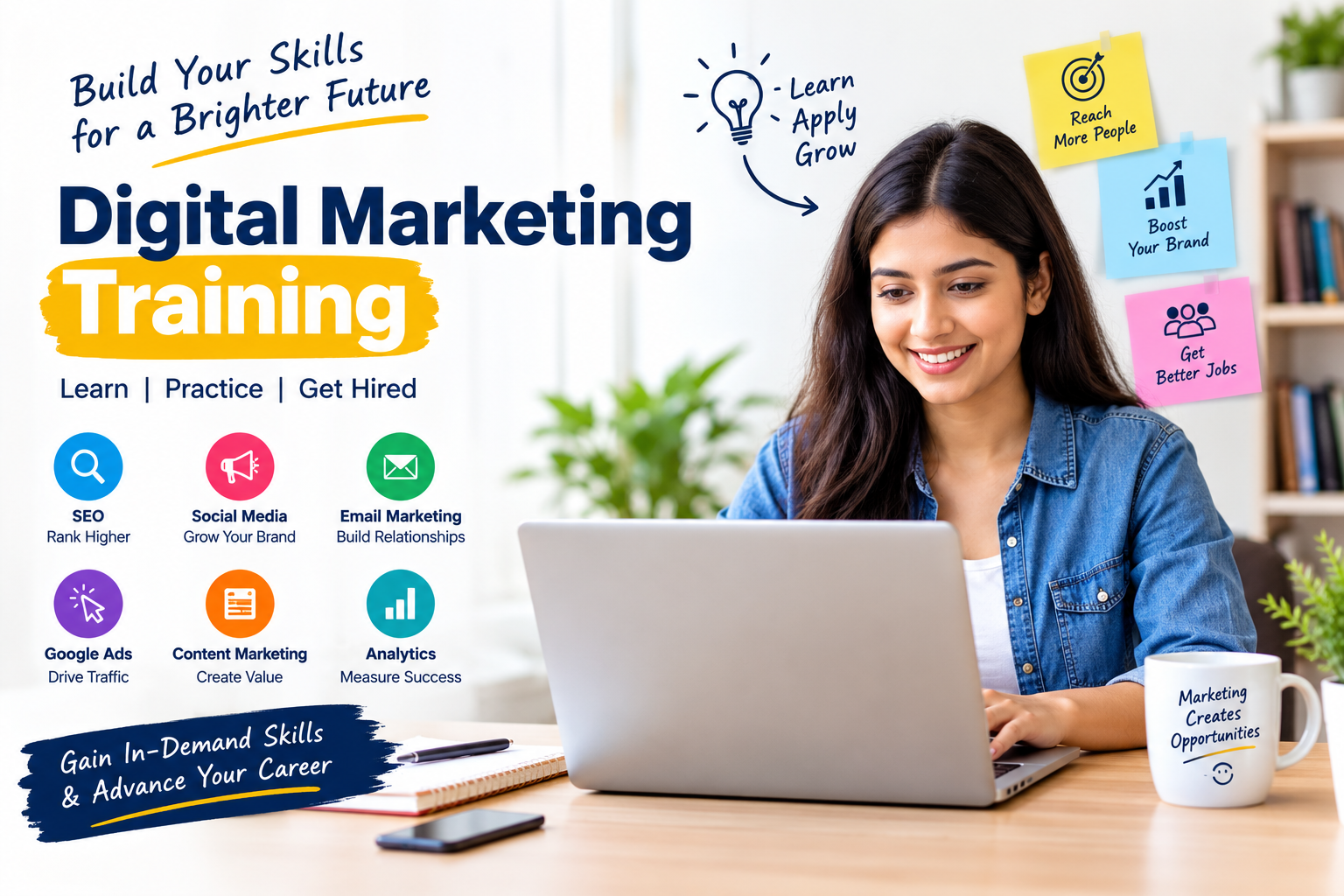
In today’s fast-changing business environment, I believe staying competitive requires more than traditional marketing knowledge. Businesses are increasingly relying on digital platforms to connect with customers, build brand awareness, and increase sales. As marketing trends continue to evolve, developing relevant skills has become essential for students, professionals, entrepreneurs, and business owners. This is where Digital Marketing Training can make a meaningful difference by helping individuals understand current marketing practices and apply them effectively.
From my perspective, learning digital marketing is not just about understanding online tools. It is about developing the ability to adapt, analyze customer behavior, and make informed decisions that support long-term career growth.
Why Is Digital Marketing Training Important for Staying Competitive?
I believe professional growth depends on how well we adapt to changing industry requirements. Digital marketing includes several important areas, such as search engine optimization (SEO), social media marketing, content creation, email marketing, paid advertising, and web analytics.
By learning these areas, I can better understand how businesses attract audiences, generate leads, and measure campaign performance. Structured training also helps me identify skill gaps and focus on the areas that matter most to employers and clients.
Another important advantage is flexibility. Digital marketing skills are valuable across industries, including education, healthcare, retail, technology, and professional services. This versatility can create opportunities for career advancement, freelancing, and entrepreneurship.
How Practical Learning Helps Me Develop Industry-Relevant Skills
I consider practical experience one of the most valuable parts of digital marketing education. Reading about marketing strategies provides a foundation, but applying them to real-world projects helps me understand how they work.
For example, conducting keyword research teaches me how to identify relevant search terms. Creating content helps me understand audience needs, while analyzing website traffic shows me how users interact with online platforms. Working with social media campaigns and advertising dashboards can also improve my decision-making skills.
When I combine theory with practical exercises, I become better prepared to handle professional challenges. A structured learning program can provide opportunities to work on projects, build a portfolio, and understand commonly used marketing tools.
Staying Ahead With SEO, AI, AEO, and GEO
I believe staying competitive also means understanding how online discovery is changing. Traditional SEO remains important because it helps websites improve their visibility in search engine results. However, marketers must also consider the growing role of artificial intelligence and conversational search.
Answer Engine Optimization (AEO) focuses on presenting clear, relevant information that can address users’ questions. Generative Engine Optimization (GEO) emphasizes making content useful, credible, and understandable for AI-powered search and answer experiences.
I can strengthen my approach by creating helpful content, using descriptive headings, answering common questions, demonstrating expertise, and keeping information accurate. AI tools can support research, brainstorming, and content analysis, but I believe human judgment remains essential for maintaining originality, accuracy, and audience trust.
Through continuous learning and experimentation, I can adapt my marketing strategies as search technologies and customer expectations evolve.
How the Right Training Can Support Career Growth
Choosing an appropriate training program is an important step toward building confidence and competence. I would look for a course that combines updated concepts, practical assignments, industry-relevant tools, and guidance from experienced trainers.
JDM Training is one option I would explore when researching opportunities to develop digital marketing skills. Before selecting any program, I would review its curriculum, practical learning opportunities, mentorship, and support for building a portfolio.
I would also focus on developing transferable skills, including communication, creativity, analytical thinking, and problem-solving. These abilities help me interpret campaign results, understand business goals, and communicate recommendations effectively.
For anyone exploring structured learning opportunities, explore digital marketing courses and practical career-focused training at JDM Training. The right learning environment can help turn foundational knowledge into skills that are useful in professional settings.
Why Continuous Learning Matters in Digital Marketing
I do not believe digital marketing is a field where learning stops after completing a course. Search algorithms, advertising platforms, consumer preferences, and AI technologies continue to change. To remain competitive, I need to follow industry developments, experiment with new approaches, and evaluate the results of my work.
I can also learn by studying successful campaigns, participating in professional communities, and working on personal projects. Reviewing campaign performance helps me recognize what works, identify weaknesses, and make improvements.
Ultimately, Digital Marketing Training can give me a strong foundation, but consistent practice and curiosity help me maintain that advantage over time.
Frequently Asked Questions (FAQs)
- Does digital marketing training help me stay competitive?
Yes. It can help me develop relevant skills, understand current marketing tools, and adapt to changing industry requirements. Practical experience and continuous learning further strengthen my competitiveness.
- Who should consider digital marketing training?
Students, fresh graduates, working professionals, entrepreneurs, freelancers, and business owners can benefit from learning digital marketing, depending on their career goals and existing skills.
- Does digital marketing training include AI and SEO?
Many modern programs cover SEO, content marketing, analytics, social media, and paid advertising. Some also introduce AI-assisted marketing, AEO, and GEO. I would check the syllabus before enrolling to confirm the topics included.
- How can I choose the right digital marketing course?
I would compare the curriculum, practical projects, trainer experience, learning support, and opportunities to build a portfolio. Selecting a program aligned with my goals is more important than choosing one based on its duration alone.
Conclusion:
I believe staying competitive in digital marketing requires a combination of relevant knowledge, practical experience, adaptability, and continuous improvement. Structured learning can help me develop these abilities and prepare for new professional opportunities.
If you are ready to strengthen your skills and explore your learning options, JDM Training can be a starting point for researching your next step. Visit the JDM Training team to discuss digital marketing course options and learning goals and take a proactive approach to building a future-ready career.